Dr. Andra Velea @BEM Summit 2026

The SoMa team will be returning this year to the Bioelectronic Medicine Summit, which is held between Sept. 28-29, in New York, USA.

This time, Dr. Andrada I. Velea will be traveling to represent our lab and present our group work on the topic of “Thermoplastic Polyurethane as a Novel, Versatile Material for Multimodal Neural Interfaces”.

If you are attending reach out to Andra, she is looking forward to interact and discuss the prospects of this work!

We are very excited to be talking about this technology that we have in the making for a while and that has become a core for the neural interfaces built within our team. We also have a preprint that describes the foundations of this technology which will be up soon! Stay tuned!

Niloufar Behzadpour presenting @FUN26

Our team member and PhD candidate Niloufar Behzadpour attended this year’s Focused Ultrasound Neuromodulation Conference held in Paris between July 22-24, 2026.

Niloufar presented her poster “Developing an integrated in vitro platform for exploring multimodal interaction of low-intensity focused ultrasound and electrical stimulation” during the conference, enjoyed stimulating scientific discussions, and came back full of motivation and new ideas!

Somatic Circuits @ Festival der Zukunft

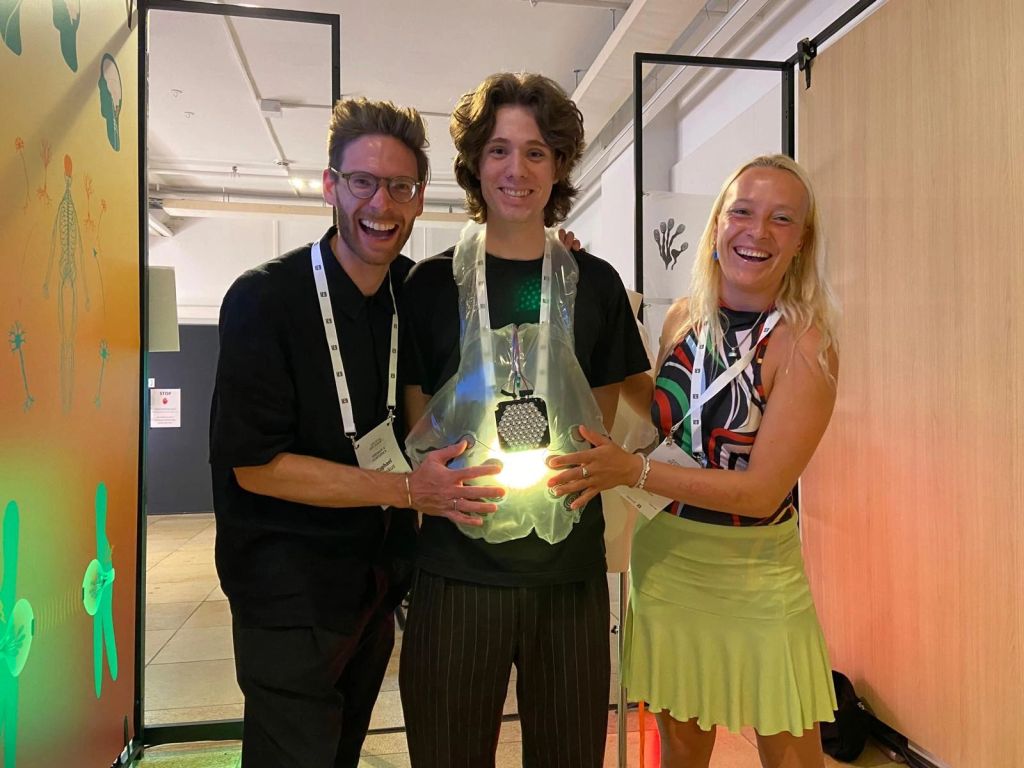
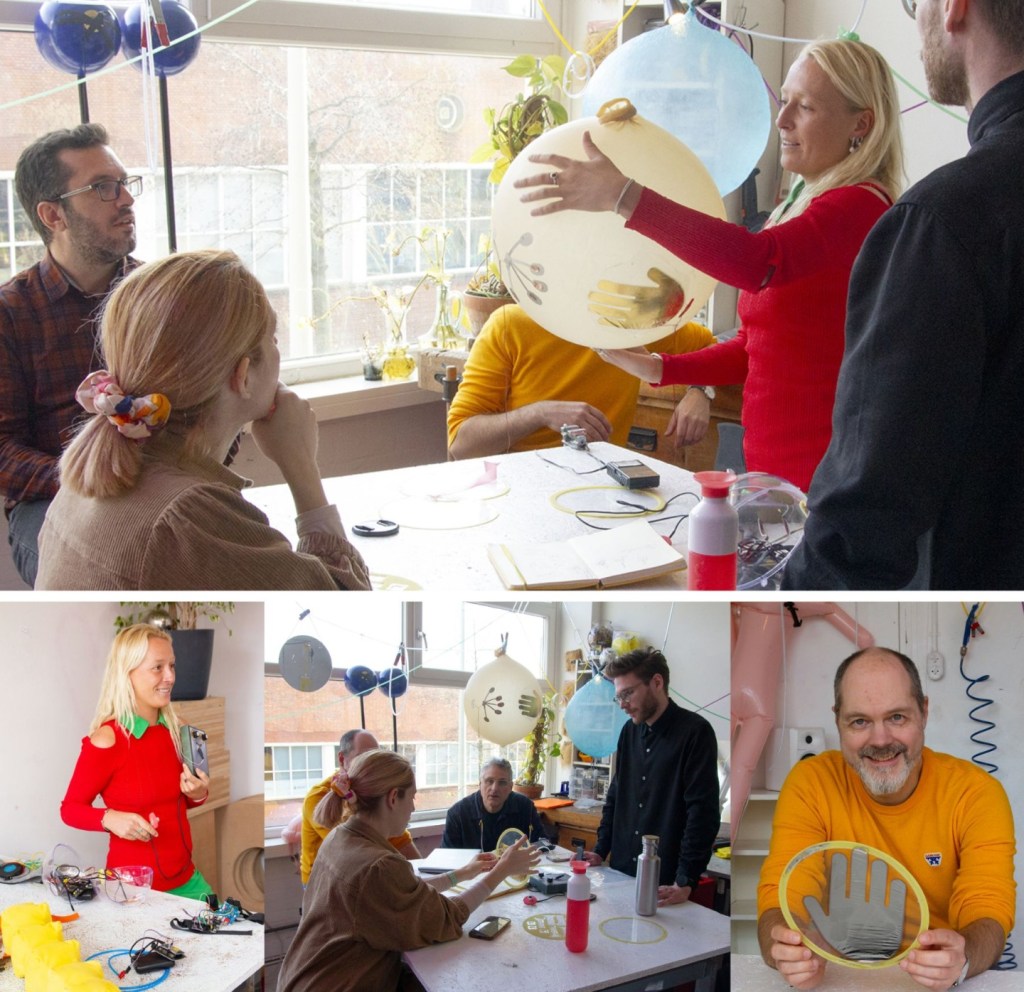
The SoMa Lab has been teaming up with the Circular Design Lab, media artist Marlot Meyer, and the curator Pierre Wolter (Gallery Art Claims Impulse) to form Somaric Circuits.

This is a result of an arts&science project at the intersection of neuro-electronics and interactive media art, funded by the WKD programme of the Fraunhofer Gesellschaft in order to translate hard science in a public experience.

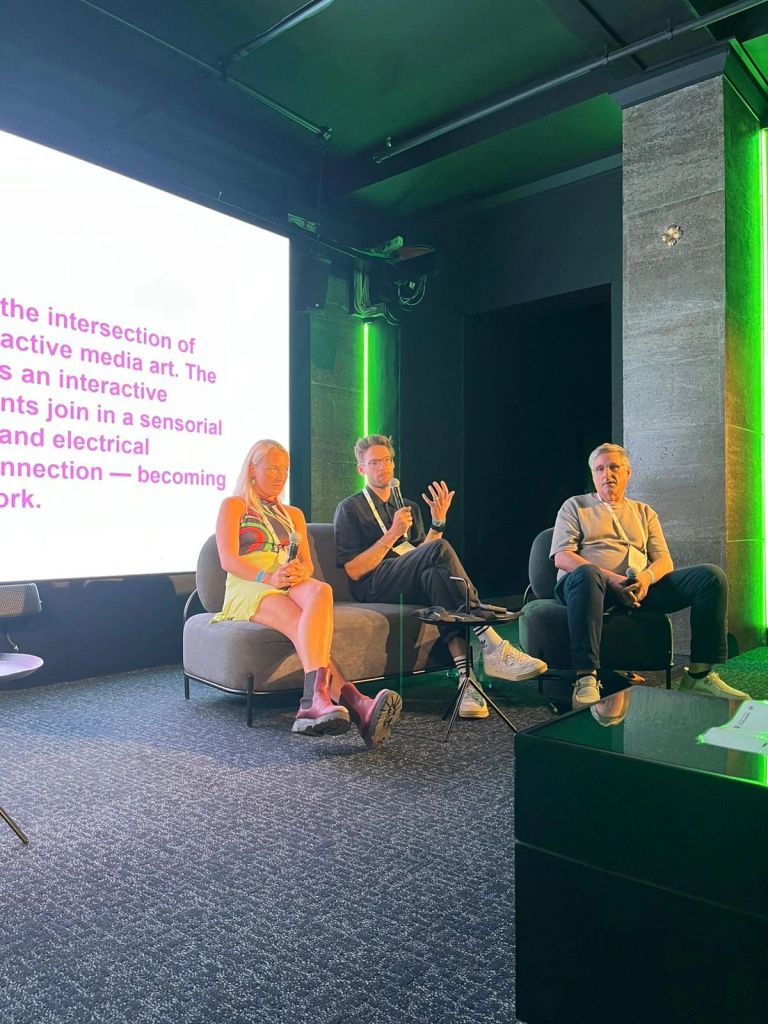
The Somatic Circuits team was present this July at the Festival of the Future (Festival der Zukunft), hosted by the Deutsches Museum in Munich, to discuss our interactive exhibition that turns neuronal communication into a physical experience. Visitors could test our inflatable wearables at our booth or join our discussion Creativity in Dialogue: What unites and divides artists and scientists? on the 2nd of July at 14:15 in the Future Box, Deutsches Museum.

Special thanks to Raphael Panskus and Ridley Vaughan for representing the SoMa team in Munich!

Read the relevant article on our Fraunhofer IZM webpage: https://www.izm.fraunhofer.de/en/news/somatic-circuits.html

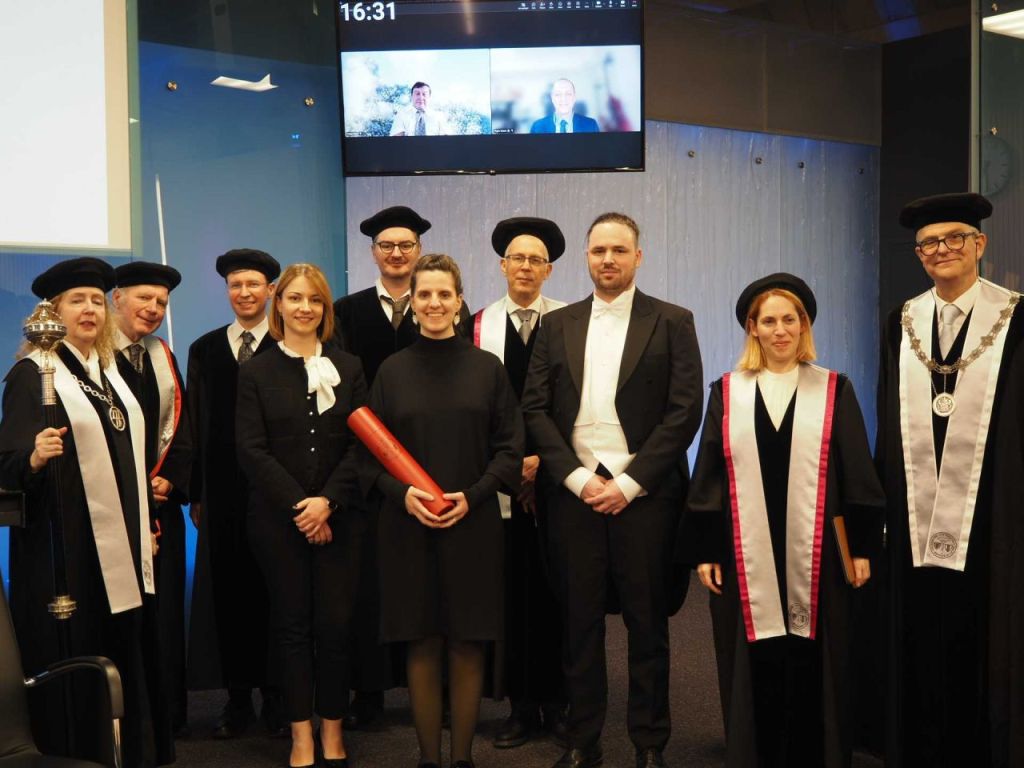
Best poster award for Dr. Christos Pavlou @2D-NL

The SoMa Lab was present this year at the 2D-NL Conference which was held in Eindhoven, The Netherlands between the 26 and 27 of May 2026.

Our PI, Vasiliki Giagka, gave an invited talk on the topic of “Optically transparent neural interfaces based on transfer-free multilayer graphene“.

Our postdoc, Dr. Christos Pavlou, presented his poster “Transparent Graphene MEAs for Ex Vivo and Implantable Neural Interfaces” and won the best poster award! Congratulations, Christos!

Vasiliki Giagka speaks at the Nature Conference on Flexible Electronics

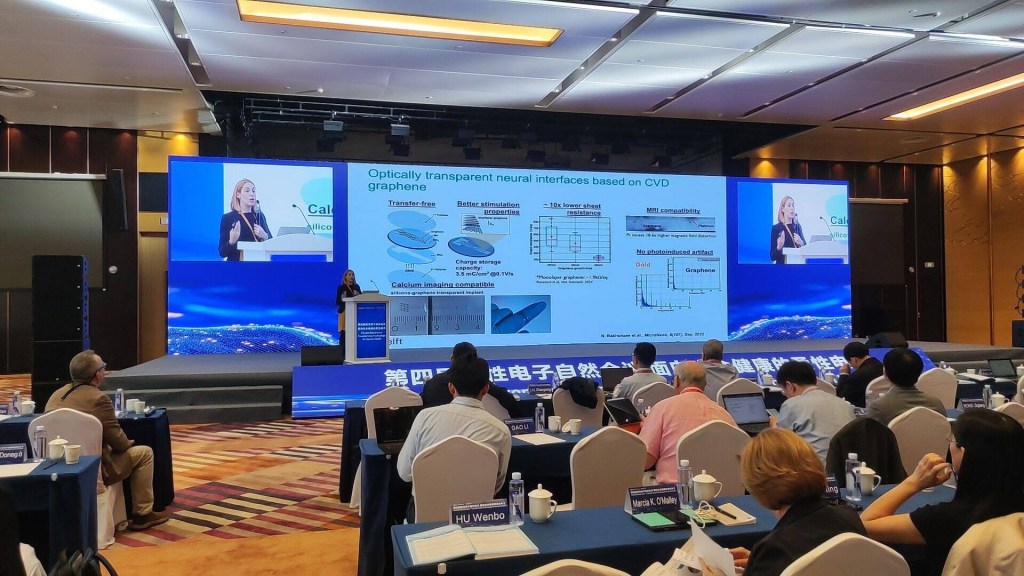
Our PI, Vasiliki Giagka, travelled recently to Xi’an, China to give an invited talk at the 4th Nature Conference on Flexible Electronics – Transforming Technology for Human Health.

Her talk “Conformal Neuroelectronics”, brought together everything our group at Deflt University of Technology and at Fraunhofer IZM has been working toward: soft, multimodal, neural interfaces that combine electrical, optical and acoustic modalities to interface with the nervous system in a way that is precise, stable and built to last.

SoMa @ GRS/GRC Neuroelectronic Interfaces 2026

The SoMa Lab participated this year at the Gordon Research Seminar and Gordon Research Conference on Neuroelectronic Interfaces.
During GRS, Andrada Iulia Velea gave an oral presentation on the topic of Bimodal Neural Interfaces: Material Insights for the Seamless Operation across Electrical and Acoustic Domains.

Our PI, Vasiliki Giagka, joined a panel to discuss “Navigating the Neurotech Landscape: Research, Entrepreneurship, Industry, and Career Opportunities” alongside Prof. Thomas Stieglitz, Prof. George Malliaras, and Prof. Maria Asplund.

During GRC, Raphael Panskus and Dr. Christos Pavlou presented their posters on Ultrasound-transparent neural interfaces for multimodal interaction and Transparent Graphene Microelectrode Arrays for Ex Vivo and Implantable Neural Interfaces, respectively.

Former SoMa members Nerea Alvarez de Eulate Llano (currently @ IMB-CNM, CSIC, PIs: Dr. Anton Guimerà and Prof. Jose Garrido) and Gonzalo Léon González (currently @Chalmers, PI: Prof. Maria Asplund), who are now pursuing their PhDs, were also attending, so it felt like a small reunion!

The conference took place in beautiful Tuscany, Italy and it was a great moment of getting together with colleagues and friends from around the world to discuss science and engineering!

GRC is definitely one of our favourites, we will be coming back!

Transparent transfer-free ultrasmall multilayer graphene microelectrodes enable high quality recordings in brain slices

New paper out! Nerea Alvarez de Eulate did a wonderful work developing optically transparent multilayer graphene electrodes, miniaturizing them down to 10 µm, and using them to record brain activity in vitro.

In this work, we present multilayer graphene microelectrodes fabricated directly on transparent wafer substrates, eliminating the need for transferring pre-grown layers. Beyond this, the key contribution lies in the fundamental demonstration: to the best of our knowledge, this is the first study to report neural recordings using transparent graphene electrodes with diameters as small as 10 µm.

An optically transparent wafer containing various MicroElectrode Array designs with transfer-free multilayer graphene.

Our results challenge the prevailing focus on achieving ultra-low electrode impedance as the primary requirement for high-quality neural recordings. While impedance plays an important role, it should be considered alongside other critical factors, including neuron–electrode coupling and the intrinsic properties of the recording electronics.

A Micro Electrode Array with 10 μm-small electrodes made of transfer-free multilayer graphene can record clean spikes from the brain ex vivo.

This was an invited contribution to the special issue “Precision Brain Interfacing”

Cite this paper: N. Alvarez de Eulate, C. Pavlou, G. León González, L. Holzapfel, Z. Gao, S. Vollebregt, and V. Giagka, “Transparent transfer-free ultrasmall multilayer graphene microelectrodes enable high quality recordings in brain slices,” Advanced Science, e17524, Jan. 2026. doi: 10.1002/advs.202517524.

Ultrasound-transparent neural interfaces for multimodal interaction

We are very excited to share our latest publication on the topic of Ultrasound transparent neural interfaces for multimodal interaction, recently published in Nature Portfolio npj Flexible Electronics in collaboration with the groups of David Maresca and Valeria Gazzola.

Schematic illustration of the concept of ultrasound-compatible neural electrodes. (1) Importance of multimodal sensing and stimulation, (2) Challenges of ultrasound wave propagation, (3) Design method for ultrasound transparent neural electrodes
Structure and acoustic modeling of polymer-based electrodes.

Here, we introduce a framework for designing flexible, metal-based neural interfaces that remain acoustically transparent, enabling integration with functional and focused ultrasound technologies. We combine theory, simulations, and experiments to show how common implant materials and practical metal thicknesses can achieve high ultrasound transmission. Importantly, we demonstrate in vivo compatibility with functional ultrasound imaging (fUSI),
with undistorted signal transmission and robust visualization of subcortical activation through a neural interface. This work lays the foundation for multimodal neural interfaces that bridge electrophysiology, imaging and neuromodulation.

Functional ultrasound Doppler imaging of mice brain through a flexible neural interface.

A special shout-out goes to Raphael Panskus, who led this impressive work.

This was an invited contribution to the special collection “Conformable
Brain-Computer and Brain-Machine Interfaces” edited by Xinxia CaiJeffrey R Capadona,
Maria Asplund and Ulrich Hofmann.

Cite this paper: R. Panskus, A. I. Velea, L. Holzapfel, C. Pavlou, Q. Li, C. Qin, F. M. Nelissen, R. Waasdorp, D. Maresca, V. Gazzola, and V. Giagka, “Ultrasound Transparent Neural Interfaces for Multimodal Interaction,” npj Flexible Electronics, 2026. doi: 10.1038/s41528-025-00517-1.