Vasiliki Giagka was recently interviewed by Bioelectronics Drop as part of the new video series Bioelectronics Talk, which features leading researchers in biomedical engineering. The interview will be released soon on Youtube, stay tuned!
Category: shown_on_homepage
Talk @ MRS in Boston
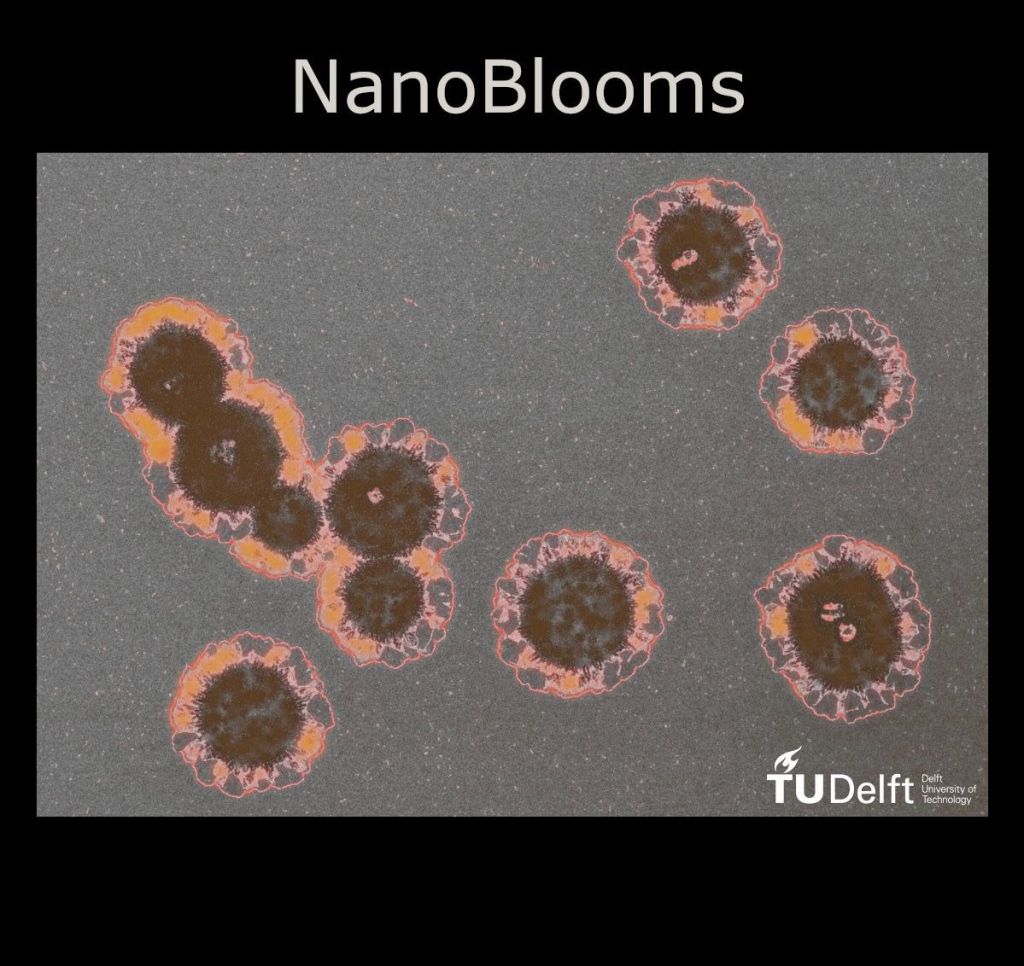
Vasiliki Giagka recently returned to MRS in Boston, where she kicked off a session on neuroelectronic interfaces with a talk on robust and conformal hybrid electronics. In addition, the group’s work NanoBlooms was selected among the 50 finalists of the Science as Art competition.

These beautiful blooms were created during a Friday afternoon experiment of Maria Camarena Perez while experimenting with the graphene growth on molybdenum catalysts and are planted on a SiO2 “soil”.
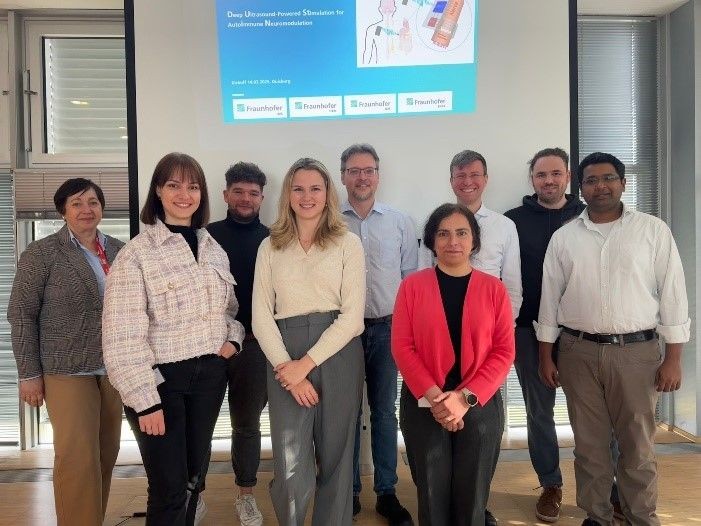
Project Kickoff: DUSTIN
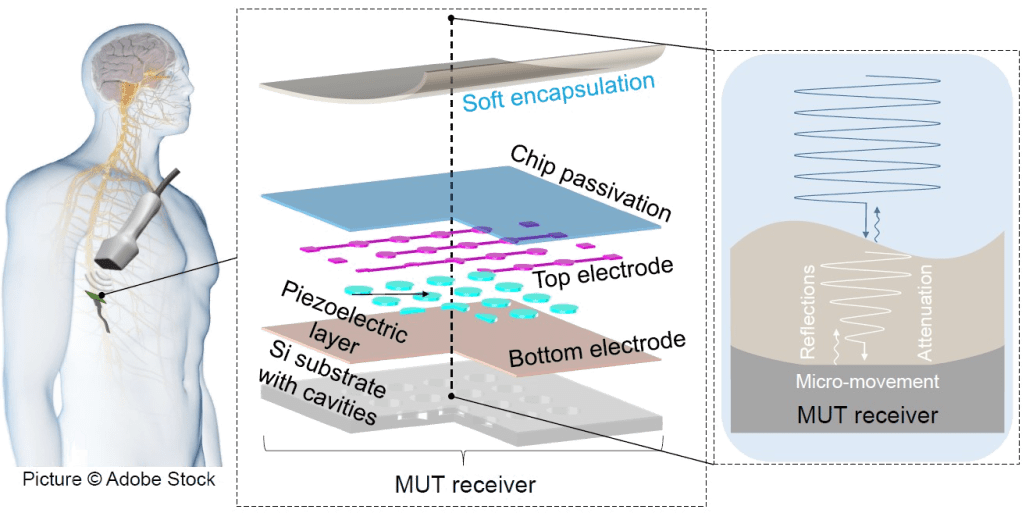
This project explores a new approach to the treatment of autoimmune diseases through a miniaturized, wireless, and battery-free implant. Developed in collaboration with the Fraunhofer Institutes IMS, ENAS, IZM, and ITEM, the system is designed to stimulate small nerve branches deep inside the body, directly at the target site and without systemic side effects.
By enabling precise stimulation of even the smallest nerve branches, this technology opens up new therapeutic possibilities beyond conventional drug-based treatments. It also highlights the potential of interdisciplinary research at the intersection of microelectronics, ultrasound technology, and biomedical engineering.

Within the project, Fraunhofer IMS develops the microchip for control, stimulation and wireless communication, Fraunhofer ENAS contributes micro-electromechanical ultrasound transducers for energy and data transfer, Fraunhofer IZM develops biocompatible and flexible housings and electrodes, and Fraunhofer ITEM evaluates the system under realistic testing conditions.
The project is funded by the PREPARE program of the Fraunhofer-Gesellschaft.
More information is available here.
How Soft Encapsulation Enables Long-Term Reliability of Silicon IC Implants
Our latest paper, “On the longevity and inherent hermeticity of silicon-ICs: evaluation of bare-die and PDMS-coated ICs after accelerated aging and implantation studies,” is now published in Nature Communications Portfolio.
Silicon integrated circuits (ICs) are at the heart of next-generation brain-computer interfaces BCIs and active neural implants. A key question driving our work: How do we ensure these tiny, powerful chips remain reliable in the body’s corrosive environment for decades?
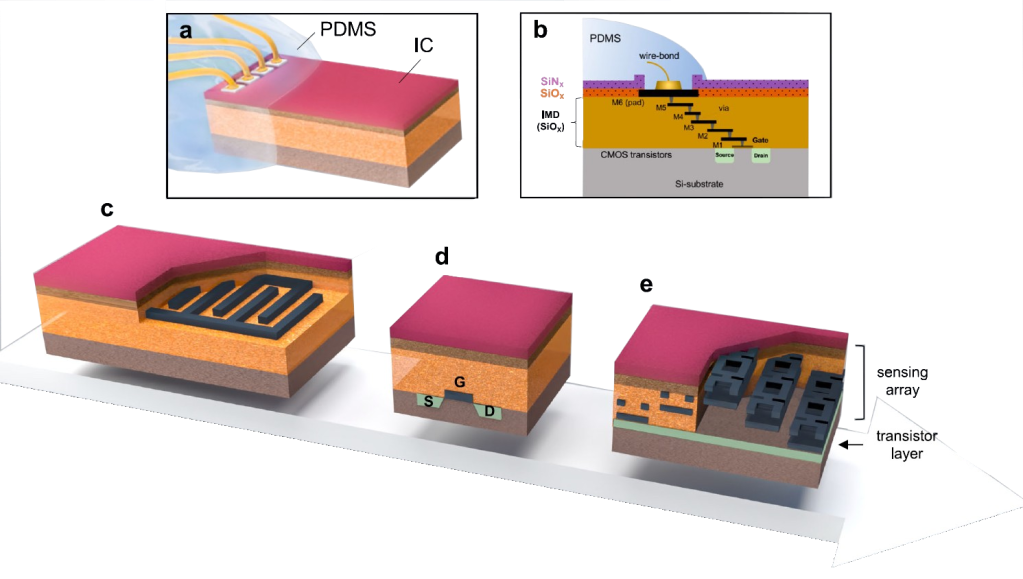
In our study, we evaluated the inherent hermeticity of CMOS ICs and explored PDMS as a lightweight, accessible encapsulation material to enhance their longevity in vivo.

Key findings:
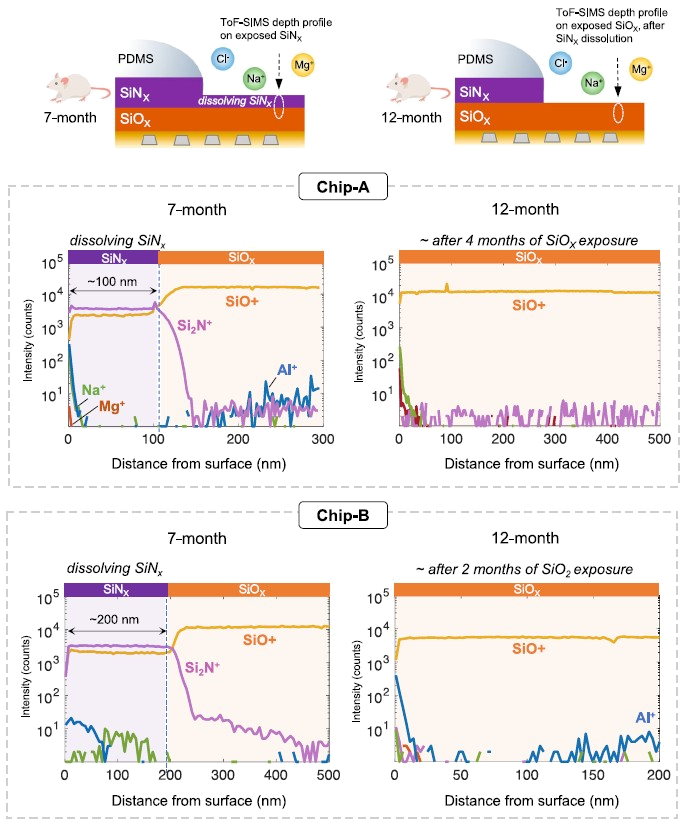
- Foundry-fabricated CMOS exhibit inherent hermeticity, and can maintain their functionality in the body for at least 12 months unprotected. However, the outer nitride layers gradually degrade over time.
- PDMS encapsulation acts as a soft moisture-permeable coating, preventing nitride dissolution, inhibiting ion ingress, and extending implantable IC lifetimes to decades.
- Accelerated aging models in PBS alone are insufficient for bare die ICs but remain valid for PDMS-encapsulated chips, thanks to the material’s protective properties.

This publication represents 4+ years of interdisciplinary effort, including in vitro and in vivo studies, to bring CMOS technology closer to its full potential in bioelectronics. There is a wealth of information in the paper, including guidelines for designing state-of-the-art polymer-packaged neurotechnologies.
We believe these findings will contribute to advancing the clinical relevance of neurotechnologies, paving the way for minimally invasive, reliable brain-machine interfaces and active neuroelectronic implants.
Cite this paper: K. Nanbakhsh, A. Shah Idil, C. Lamont, C. Dusco, O. C. Akgun, D. Horvath, K. Toth, D. Meszena, I. Ulbert, F. Mazza, T. G. Constandinou, W. A. Serdijn, A. Vanhoestenberghe, N. Donaldson, and V. Giagka, “On the Longevity and Inherent Hermeticity of Silicon-ICs: Evaluation of Bare-Die and PDMS-Coated ICs After Accelerated Aging and Implantation Studies,” Nat. Commun., vol. 16, no. 12, Jan. 2025. doi: 10.1038/s41467-024-55298-4.